
Optimizing Your Training: A Practical Guide to Performing Your Best
After 20+ years training people, I can tell you the secret to results: it's not just what happens in the gym. The people who transform their bodies are the ones who pay attention to everything outside the gym as well.
My job as a trainer is to optimize your technique and training program. Your job as a trainee is to optimize the other factors in your life (or at least not sabotage yourself).
I can't do that for you. Only you can. All I can give you are some recommendations, some things to think about, and share what has worked for me and others.
The ones who stick around long enough to make lasting change are the ones who look at the bigger picture.
The first thing to remember is that health and strength cannot be separated. As I've gotten older I've paid more attention to the "health" part of that equation. 20 year olds naturally enjoy good health. 40+ year olds need to work at it. A 40 year old that eats, sleeps and drinks like they just turned legal drinking age WILL suffer the consequences.
But if you follow these guidelines, you'll start to stack the odds in your favor.
1. The Foundation: Nutrition
Most fitness minded people already know how to eat. But let's go over it again…
Eat real food. Prioritize protein — it's the building block of muscle and keeps you full. A good starting point is roughly 0.7–1 gram of protein per pound of bodyweight per day. Chicken, beef, eggs, fish, dairy — this is the easiest way to get complete proteins that can be converted into muscle.
Vegetarian protein sources can work, but require more planning to hit optimal protein levels and avoid excess carbs. Remember this: there are essential amino acids (the building blocks of protein), essential fatty acids, and essential vitamins and minerals, but there are no essential carbohydrates. ("Essential" means you have to consume them.)
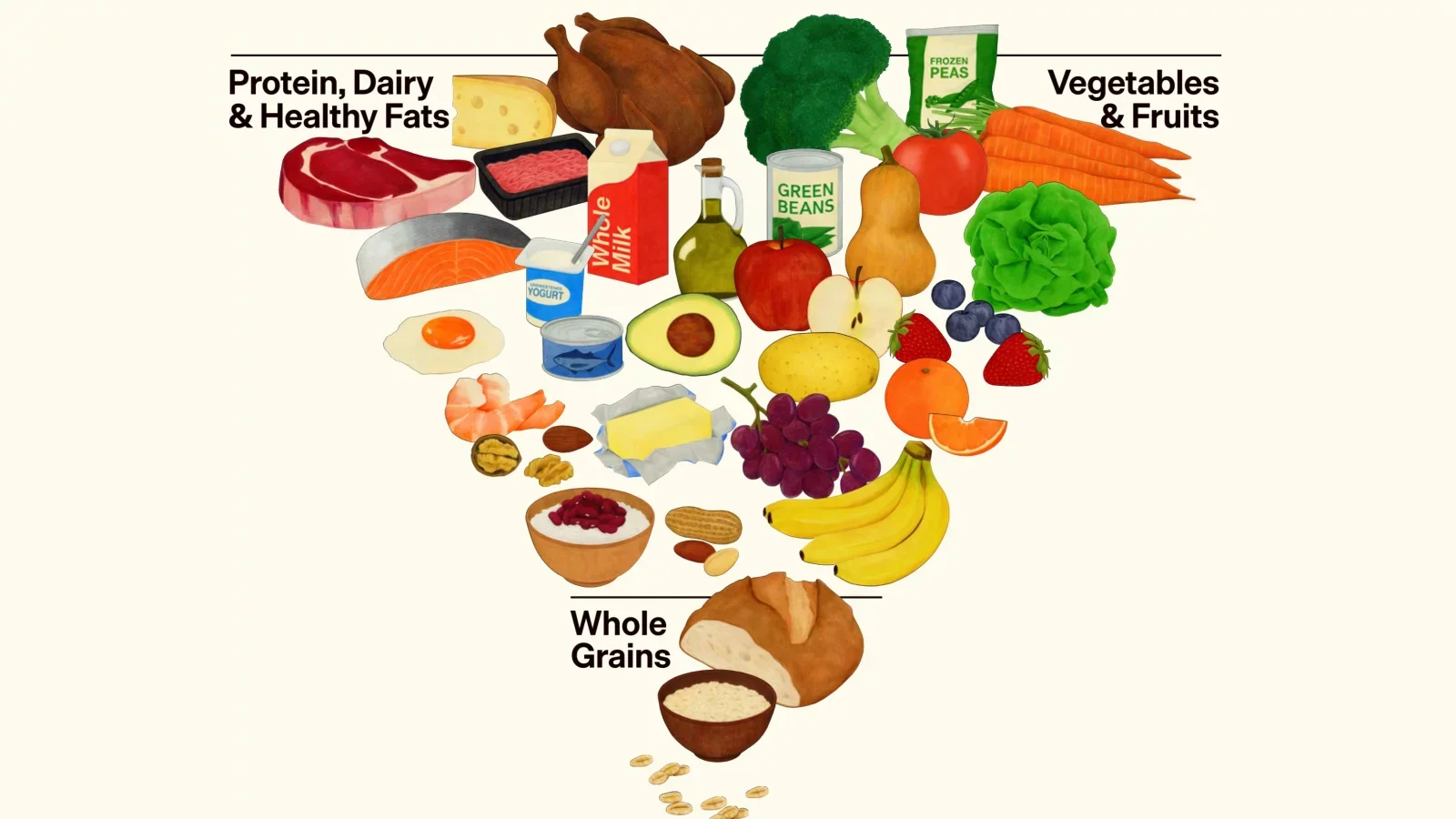
The new food pyramid
Next is hydration and it matters more than most people think. Even mild dehydration tanks your performance and your focus. Drink water throughout the day. Most adults are going to need at least 2 liters daily. If it's hot, you sweat a lot or you're a larger individual, shoot for 3 liters. Add some electrolytes (sodium, potassium & magnesium) to replenish what you've lost.
You don't need to weigh every meal or follow some extreme protocol, but tracking what you eat and drink is a good idea. In 1 week you will gain more insight into your dietary habits than any nutritionist could ever tell you. Download a tracking app like MyFitnessPal and record a normal week's worth of consumption and see if you aren't surprised by your lack of protein.
To recap, eat mostly whole foods, emphasize protein, limit empty carbs, drink a lot of water, and stay consistent. If you have a bad day or a binge weekend (you will), just get back on track as soon as you can. This alone puts you ahead of 90% of people.
2. Sleep: Your #1 Recovery Tool
A lot of people don't realize that you don't get stronger in the gym. You get stronger while you sleep. During recovery is when overcompensation occurs.
Training is a stress. A good stress — but a stress. Your body repairs and adapts to that stress during rest. If you're not recovering, you will find progressing difficult.
Sleep is the number one recovery tool you have, and it's free! Aim for 7–9 hours a night. I know life gets in the way. Stress will mess you up. I've got five kids and I'm self-employed - I get it. But make sleep a priority like you make training a priority. Your hormones, your mood, your focus, and your strength all depend on it.

A lot of the health science of today points to sleep as being the single most important thing you can do for your health. Admittedly, it is not something that I do well. Because of that it has been a focus of mine for several years now. Below are a few things that I have found to improve my sleep. Most of these I gleaned from the Huberman Lab podcast on optimizing sleep.
Light viewing - morning sunlight helps set your circadian rhythm. I try to get 10 minutes of sunlight in my eyes within the first hour of waking. I'm not staring into the sun - I'm simply facing it. I try to do my morning reading (or scrolling) outside on my deck or by a sunny window. This is also good to do in the late afternoon / early evening. The light rays still get through on overcast days, so this practice isn't necessarily weather dependent. If you get up before the sun rises, that's a different story. You might want to try a red light panel in that case.
Less stimulation before bed - trying to wind down at night should be obvious, but this includes artificial lights, screentime, and nighttime workouts (if that's the only time you have to workout, it is what it is).
Supplementation - taking the following supplements have been extremely helpful for me: magnesium, B12, zinc and methyl-folate (folic acid). I take them about 30 minutes before bed.
Sleep apnea - I just did an at-home sleep study and found that I have mild sleep apnea. I've known I've had it for a while; I'm 250lbs with a 19" neck (and if you're built like that, you almost certainly have it too), I wake up frequently, and I snore. The natural remedies I've tried with mixed success have been nasal decongestants, nasal strips, mouth tape, changing my sleeping position, and about 20 different pillows. Getting a CPAP machine was my last resort, and I've got an appointment to get fitted. I'll report back with results.
3. Recovery & Therapeutics
I'm going to group all of the therapies together; massage, heat, ice, muscle rubs and red light therapy. I've done them all. We have at home a massage table (and countless massage tools), a steam sauna w/ red light, an ice barrel, cupping, graston, e-stim, and all manner of liniments and muscle rubs. These all have value, but this is just icing on the cake!
The 2 main ingredients in recovery are quality sleep and proper nutrition. These therapies do not replace those things. Consider them as supplements. Just like a protein shake supplements your diet but does not replace food, therapies can aid in recovery but do not replace sleep. Keep the main thing the main thing.
Side note: some of these therapies can help with sleep. I believe my latest addition of sauna and red light therapy has helped to improve my sleep.
4. Cardio & Mobility
A lot of people in the strength world avoid cardio like it's the enemy. It's not. It's a tool, and like any tool, you just have to know how to use it.
You don't need to run marathons. A few sessions per week of low-intensity cardio — walking, cycling, rowing, sled dragging — goes a long way for heart health, recovery, and body composition. Keep it easy enough that you could hold a conversation. That's the zone you want most of the time. There are a lot of ways to get cardio in; yoga, dance, martial arts, high rep kettlebell workouts, and even things like gardening. Just move.
Mobility is equally underrated. Tight hips, stiff thoracic spine, locked up ankles — these things will limit your movement and eventually cause injury, keeping you from ever reaching your strength potential. Spend some time on it. Not hours — 10 minutes of targeted mobility work before your sessions makes a real difference over time.
The goal is to be able to move well and move often. Cardio and mobility keep you in the game long enough for strength training to do its job.
5. Mindset & Habits
This is the part most fitness content skips over, but it might be the most important piece of the puzzle.
Your results will be determined by what you do consistently — not by any single workout or perfect meal. Consistency is king. I've said it for years and I'll keep saying it: the person who shows up three days a week for three years will always beat the person who goes all-out for six months and then takes 6 months off. Classic tortoise and the hare.
Build habits, not motivation. Motivation comes and goes. Habits stay. Put your training on the calendar like a meeting you can't cancel. Prep some food on Sunday so you're not grabbing garbage at noon on Wednesday. Get to bed at a reasonable hour during the week. Small actions, done daily, compound into massive results over time.
And get your head right. Your mindset around health is everything. Don't look for shortcuts or a quick fix. Don't eat healthy then turn around and consume poisoned politics and hate filled vitriol. Don't listen to that which spreads negativity, toxicity, fear and anger. Rid yourself of any person, place, thing or thought that brings you down.
"Fix your thoughts on what is true, and honorable, and right, and pure, and lovely, and admirable. Think about things that are excellent and worthy of praise." — Philippians 4:8

Two guys on a bus
The mindset portion deserves an article of its own. How bad do you want it? How serious/focused are you about training? What do you believe about yourself? What do you think is your potential and what will you do to achieve it? Are you willing to do psychological housekeeping to change limiting self talk to that which uplifts and empowers?
Questions like these will get you started thinking about the mental game but you will need a deeper study into your "self" if you want to get anywhere near self mastery. I am a big fan of self help books like The Secret, Think and Grow Rich and Psycho-Cybernetics. But a better place to start might be Jordan Peterson's Self Authoring program. It's an online writing program that will help you explore your past, present and future. This goes well beyond optimizing your training but I think it's a valuable exercise in understanding what makes you tick in all aspects of life.
6. Building Strength
Now we get to the part everyone wants to talk about first - strength training (purposely put last).
Here's my advice: keep it simple and do it consistently.
You don't need a complicated program. You need to squat, hinge, push, and pull — and do it regularly with progressively heavier loads. That's it. Those four movement patterns cover most of the entire body. The implement you use doesn't matter; kettlebell, barbell, bodyweight or odd-object. The movement matters.
Throw in weighted carries and Turkish Get Ups to fill in any gaps, and add specialized variety and freestyle work to keep it interesting.
Regardless of what you do, progressive overload is the key principle. Over time, you need to either lift more weight, do more reps, or both. Your body adapts to the demands you put on it. If you do the same workout with the same weights forever, you'll maintain what you've got — but you won't grow.
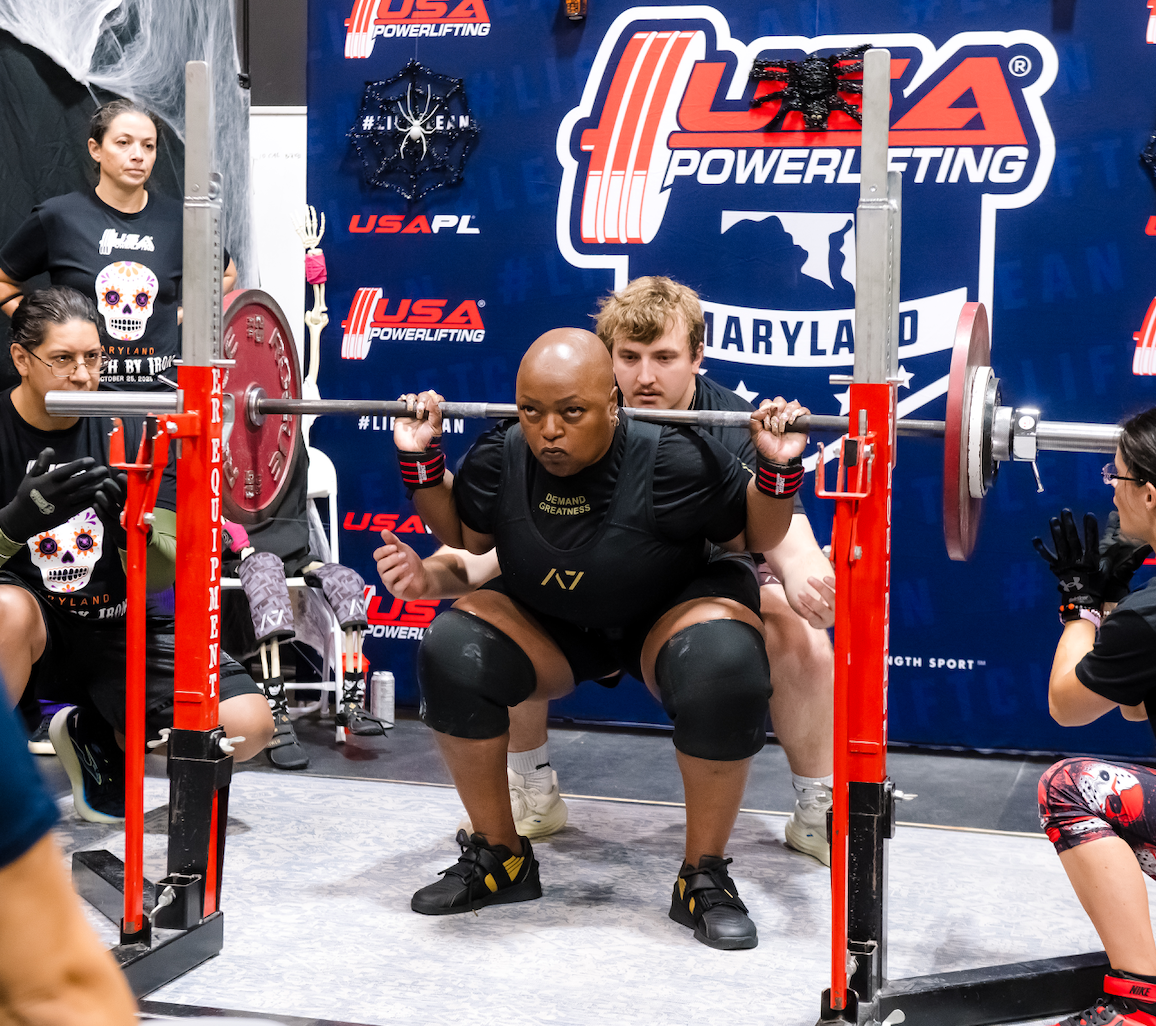
Kim Ramsey at the USPL powerlifting meet
A few things I've learned coaching people at every level:
Optimize technique first, weight second. I don't care how much you can lift if you can't lift it well. Poor technique can lead to injury, and injury kills progress. On the other hand, good technique will allow you to lift the most weight. Learn the movements properly before you concern yourself with increased loads.
Focus on Compound Movements. Multi-joint exercises. The previously mentioned push, pull, squat, hinge, etc. Prioritize these over the single joint exercises. Compound exercises work more muscle and have a higher potential.
Don't train to failure. Most of the time you should leave a rep or two in the tank, especially on the big lifts. "Going to war" with the weights every session is a fast track to burnout and injury. Training should feel challenging but manageable. Having said that, there are times to test your max and you do have to learn how to train intensely.
Frequency beats intensity. Training a movement two or three times per week will get you stronger faster than one brutal session per week. Your nervous system needs repeated exposure to get good at something.
Strength is a skill. Treat it that way.
Start Today
You don't need to overhaul everything at once. Pick one area from this post and focus on it for two weeks. Sleep better. Clean up your eating. Add two days of lifting to your week. Just start somewhere.
The people I've seen transform their health and their bodies over the years weren't the ones with the best genetics or the most time. They were the ones who showed up consistently, did the basics well, understood that training was more than just what happened at the gym, and kept going even when it wasn't exciting.
That can be you. It starts today.
-Dan Cenidoza

Dad’s and Daughter’s workout
Want to put this into practice? Schedule a personal training session or come check out our group training programs — we offer a free trial and coach people of all levels. Strength is for everyone.
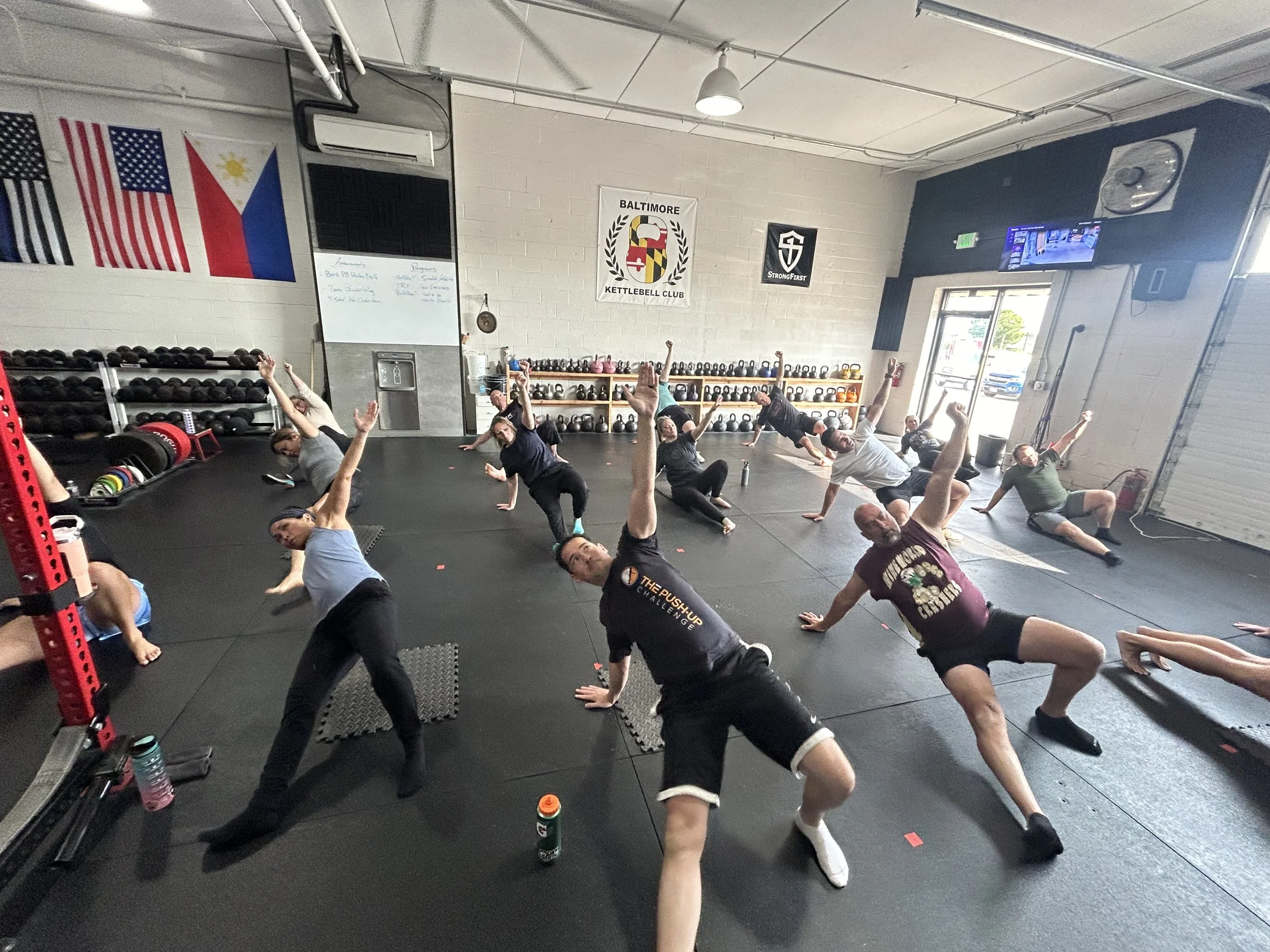
Group Training session at BKC