
A Minimalist Approach to Training During Times of High Stress
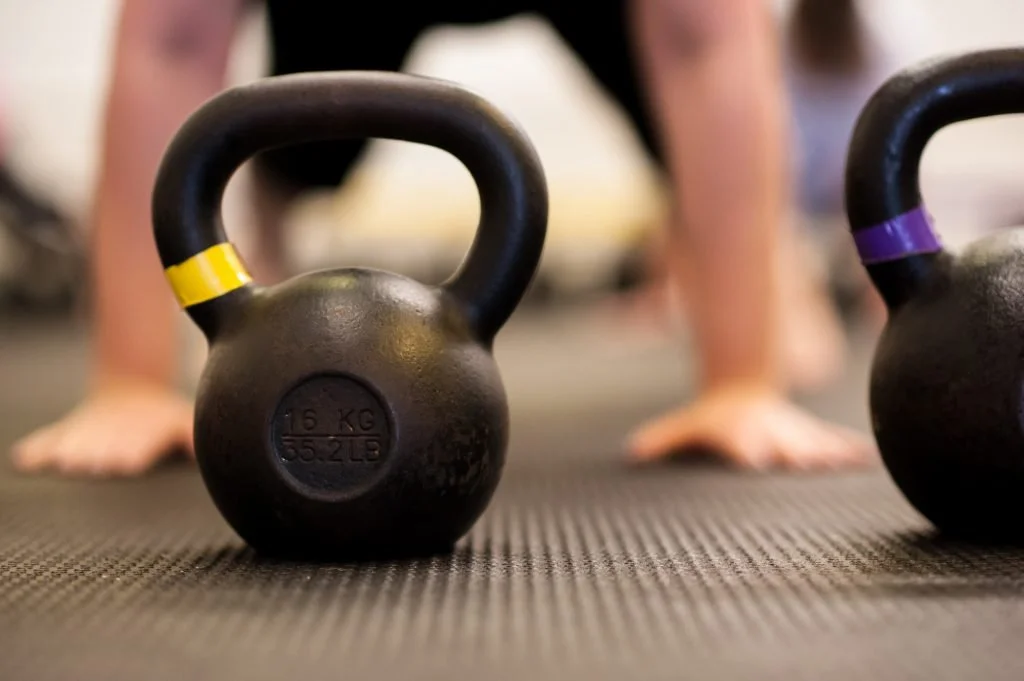
We talk a lot about "becoming more." Usually, that means getting stronger, better conditioned or technical improvement. But life isn't a linear graph. Sometimes, a heavy ruck gets thrown on your back when you aren't looking.
Whether it’s the grind of starting a new venture, family transitions, or just a season where the "invisible weight" of stress is redlining your nervous system, your training has to adapt.
In times of high stress, your ability to recover is compromised. Your time is at a premium. The solution isn’t to quit—the solution is Minimalism. It’s about doing fewer things better. It’s about stripping away the "fluff" and focusing on the foundational movements that keep the engine running without blowing a gasket.
The Power of the "Big Three"
When the world is loud, your program should be quiet. To maintain total-body strength and functionality, you only need to cover three bases: Push, Pull, and Legs. By selecting one high-yield movement for each, you ensure that no part of the machine is left to rust, but you aren't spending precious "recovery currency" on accessory work that doesn't move the needle.
Legs: A hinge or a squat If you can choose both, do both. It doesn’t really matter what type of hinge/squat you do, just stick with what you pick. This is not the time for all of the different variations. Focus on a single exercise and do it 1-3 times a week.
Push: Horizontal or Vertical I am partial to the overhead press (especially when you clean it from the floor) because I like the full body nature of it, but the bench press is a solid choice too. You can bench far more weight than you can press overhead so it’s not really a trade off as it is personal preference.
Pull: Horizontal, Vertical or Clean The clean, and all of its variations, is considered a “pull”. It’s a bit of a blend of upper body and lower body pull. Either way, it is as deserving to be in the conversation as pull ups and heavy rows.
The goal here isn’t breadth but depth. Choose 3-5 exercises that provide stimulus to the entire body and focus on them almost exclusively. Give it 6-12 weeks before changing things up. Variables to play around with are load, volume, intensity of effort and order of exercises. Feel free to adjust those variables based on the amount of stress you’re under on any given day.
One thing that is not recommended here is training until failure. Save that stress for when life isn’t smacking you upside the head.

The "Linkage" and the Engine
A minimalist program shouldn't just be "slow and heavy." To remain a high-performance human, we have to address the nuances that keep the system efficient:
Explosive Movements for Power: You cannot lose your "snap." Selecting Kettlebell Swings, Snatches or C&J’s as one of your chosen exercises maintains your power development. Power is the first thing we lose as we age; it’s the last thing you want to sacrifice during stress.
Grip for Neuromuscular Efficiency: Your hands are your primary connection to the world. A strong grip sends a signal to your brain that it is "safe" to produce force. If your grip is weak, your nervous system will "brake" your strength to protect you. Incorporate grip training into your upper body pulls by using thick bars or some other grip challenging implement, or do a stand alone exercise like squeezing grippers.
Ab Work for "Linking": Your abs are the link that allows force to travel from your feet to your hands. If that link is soft, you leak power. Be intentional about tightening your abs with every exercise you do (e.g. abdominal brace) or include strong ab exercise as one of the 3-5 in your minimalist routine. When I say “strong ab exercise” I don’t mean sit ups that you can do for 50 reps. Choose something like ab rollouts or toes-to-bar where 5-10 reps is your max.
Putting it all Together
I invite you to select your own exercises based on your wants and needs. But if you’d rather have a template or pre-programmed workout, Punch the Clock fits the bill.
The basic version of the PTC workout is performed with a single kettlebell with the following exercises:
Swing 10
Press 5
Row 10
Squat 5
Rest (1 min)
Reps listed are for each hand (so it’s actually 20 swings and 10 squats) and each exercise is performed On-the-Minute (or EMOM) with the 5th minute being a rest. 5 rounds… 25 minutes… full body strength & conditioning.
You are welcome to adjust the variables of this workout and I’ve done just about every variation imaginable. Play around with it and make it your own (or just follow the plan as is).
Two changes I’d suggest is replacing the row with the snatch (do 5 snatches instead of 10 rows) and replace the 5th minute rest with 30 seconds of intense ab work. (Or, if you feel like you really need that rest, take it and add 5 minutes of abs to the end of your workout.)
Remember, don’t overthink it. Just do what you can when you can. The fact that you do something is what’s most important. Your training isn’t this external thing you do, it’s very much connected to the brain and nervous system and needs to be adjusted as things ebb and flow! [Thanks for that last line, Kristin!]
A Personal Note
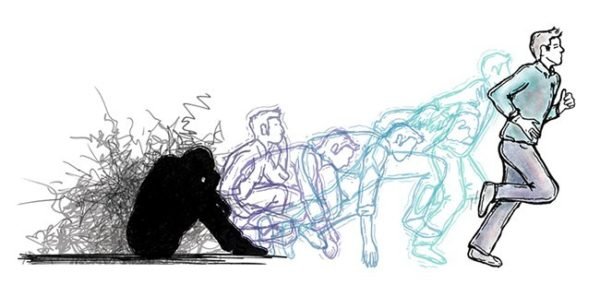
I practice what I preach. Lately, I’ve been under a significant amount of stress—balancing the move of the gym and the launch of a new venture.
There were days when the old me would have tried to grind through a 90-minute session, only to end up more depleted. Instead, I’ve moved to a minimalist program. Three movements, sometimes only two. 30 minutes. Focus on quality, tension, and breathing.
The result? I’m maintaining my strength, and perhaps more importantly, I’m using the gym to manage my stress rather than adding to it.
If you’re feeling the weight of the world right now, don't stop moving. Just simplify. Focus on the fundamentals. Do fewer things, but do them with a level of mastery that makes them count.
Be More. (Even when life demands you do less.)